Project details

Client:
Master's Research Project | London, United Kingdom
Tool:
Adobe Indesign, Adobe Illustrator, Adobe Photoshop
Project Overview
This project explores the design of thoughtful, minimal and multipurpose packaging for scarves, inspired by Japanese packaging principles and origami-based structures.
The focus was to create a packaging system that goes beyond conventional wrapping. Instead, the package becomes part of the product experience — something that can hold, reveal, protect and communicate craft through its form.
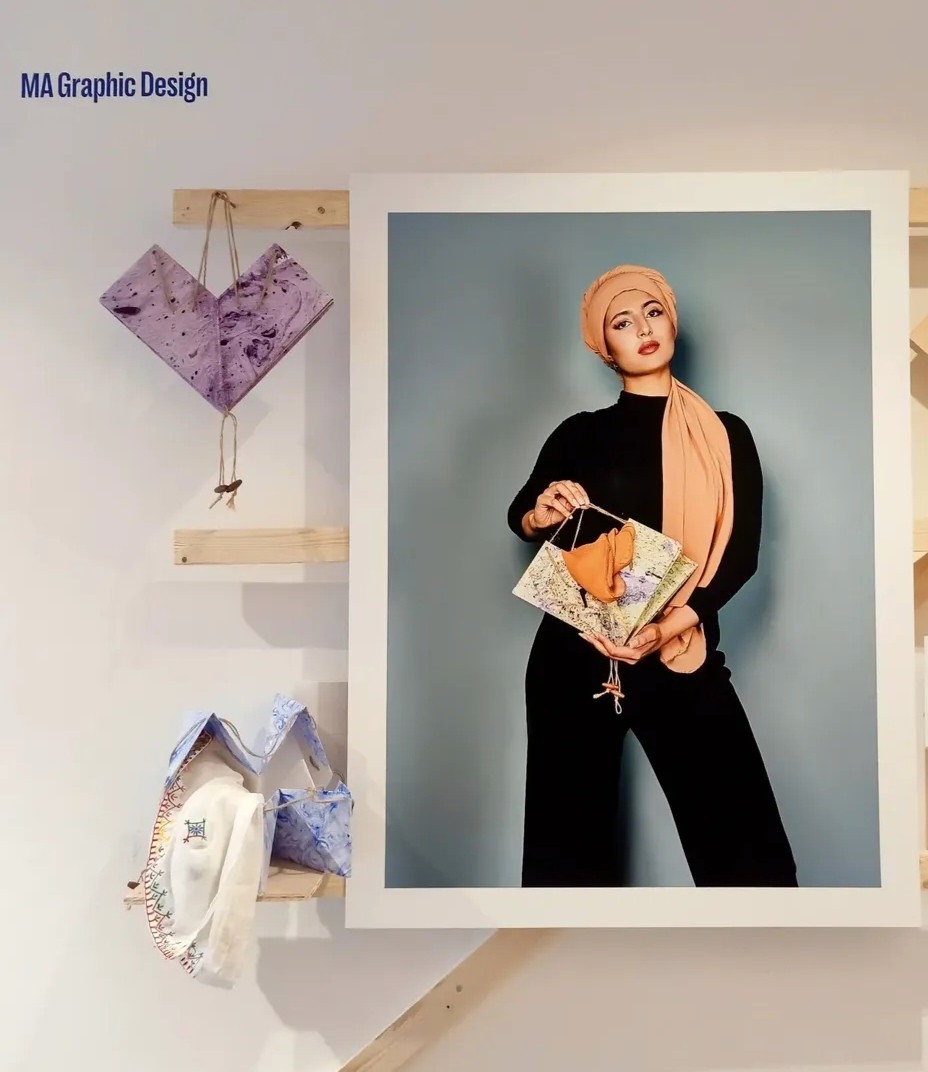
Inspired by the precision and simplicity of Japanese packaging design, the project uses paper folding, thread interlocking and handmade surface treatments to create a packaging object that feels delicate, functional and emotionally connected to the textile it carries.
The final outcome translates the softness and intricacy of embroidered scarves into a structured paper form, where folds, threads and handmade textures work together to create a refined and tactile unboxing experience.
Research Problem
How can Japanese-inspired packaging principles and origami-based structures be used to design thoughtful, minimal and multipurpose packaging for scarves?
Design Aim
The aim is to create packaging that is not just protective, but also functional, reusable and emotionally connected to the product. Through paper folding, thread interlocking and handmade surface experimentation, the package becomes a multipurpose object that enhances the scarf’s presentation and unboxing experience.
The design focuses on simplicity, precision and craft, translating the softness of textiles into a structured paper form while maintaining a delicate, refined and handmade quality.


Prototyping Phase
Prototype 1: Square-Folded Scarf Package
The first prototype was designed for a scarf folded in a square format. The prototype used paper folds and punched holes to allow thread to move through the package.
Learning:
The package needed to balance structure, flexibility and visual delicacy. It also had to hold the scarf without losing its crafted quality.
Prototype 2: Rolled Scarf Package
The second prototype experimented with a rolled scarf format. This version explored a more cylindrical approach and allowed the thread to wrap around the scarf and package.
Learning:
Although the rolled scarf created a neat packaging experience, it was less aligned with the project constraint. The square-folded format was stronger for the final direction.

Final Prototype Development
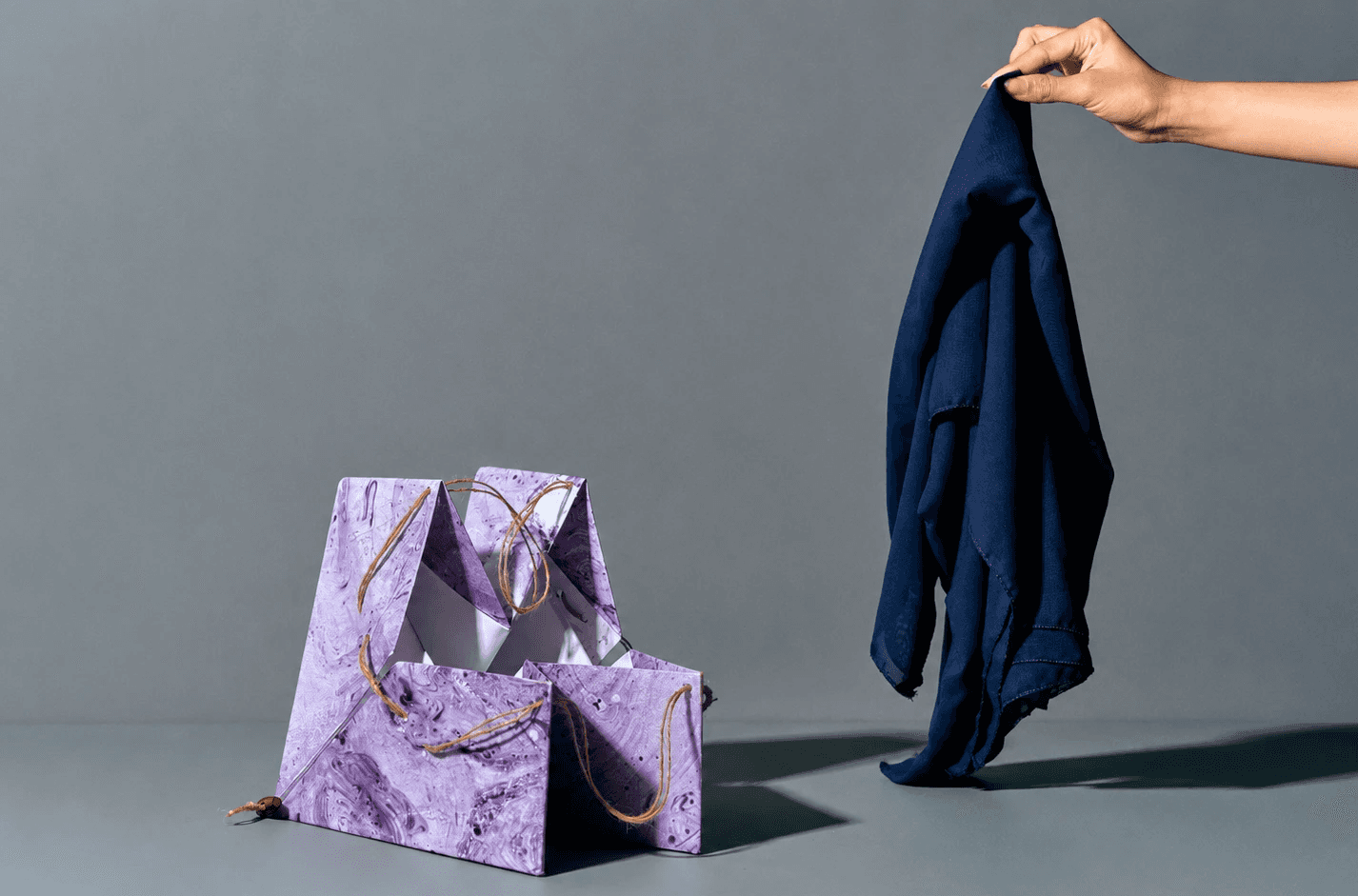
The final prototype was made as a folded paper package with angular forms, thread weaving and an open-close interaction. The package size was developed at 60 cm x 60 cm.
A folded scarf was placed inside the structure, and thread was woven into the package to create the feeling of embroidery on paper.
Key design features:
Folded paper construction
Thread interlocking system
Handmade surface quality - Traditional printing - Marbling technique
Scarf placed inside the foldable structure
Packaging that can open, close and display the product in the stores
Paper Marbling Experimentation
This was one of the most important experimental sections of the project. The marbling technique - a traditional Japanese printing technique was chosen for its packaging design.
The marbled paper visually connected to the uniqueness of hand embroidery because every marbled sheet creates a different pattern, just as every embroidered garment is different.
After many, the corn starch was prepared with the correct viscosity, but this time fewer drops of paint were used.
Blue and yellow acrylics were gently moved in the corners of the tub to create more delicate patterns.
Outcome:
This trial was the most successful. The prints were softer, more refined and closer to the desired visual language.
Learning:
I that using fewer colours and lighter patterns created a more elegant and delicate result. This became the direction for the final print.
Final Print Development
Print Day 1
The final printing process began by preparing the corn starch and cutting large sheets to the required size in the letterpress studio.
The team prepared three sheets, intended for three final packages for the brand shoot.
The sheets were then marbled using the selected blue-toned pattern direction and left to dry.
Print Day 2
On the second print day, a different approach was tested using ink in clear water.
A few drops of the desired colour were added to the tray, and sheets were dipped to create final marbled surfaces.
This method produced softer, water-like patterns with a handmade finish.